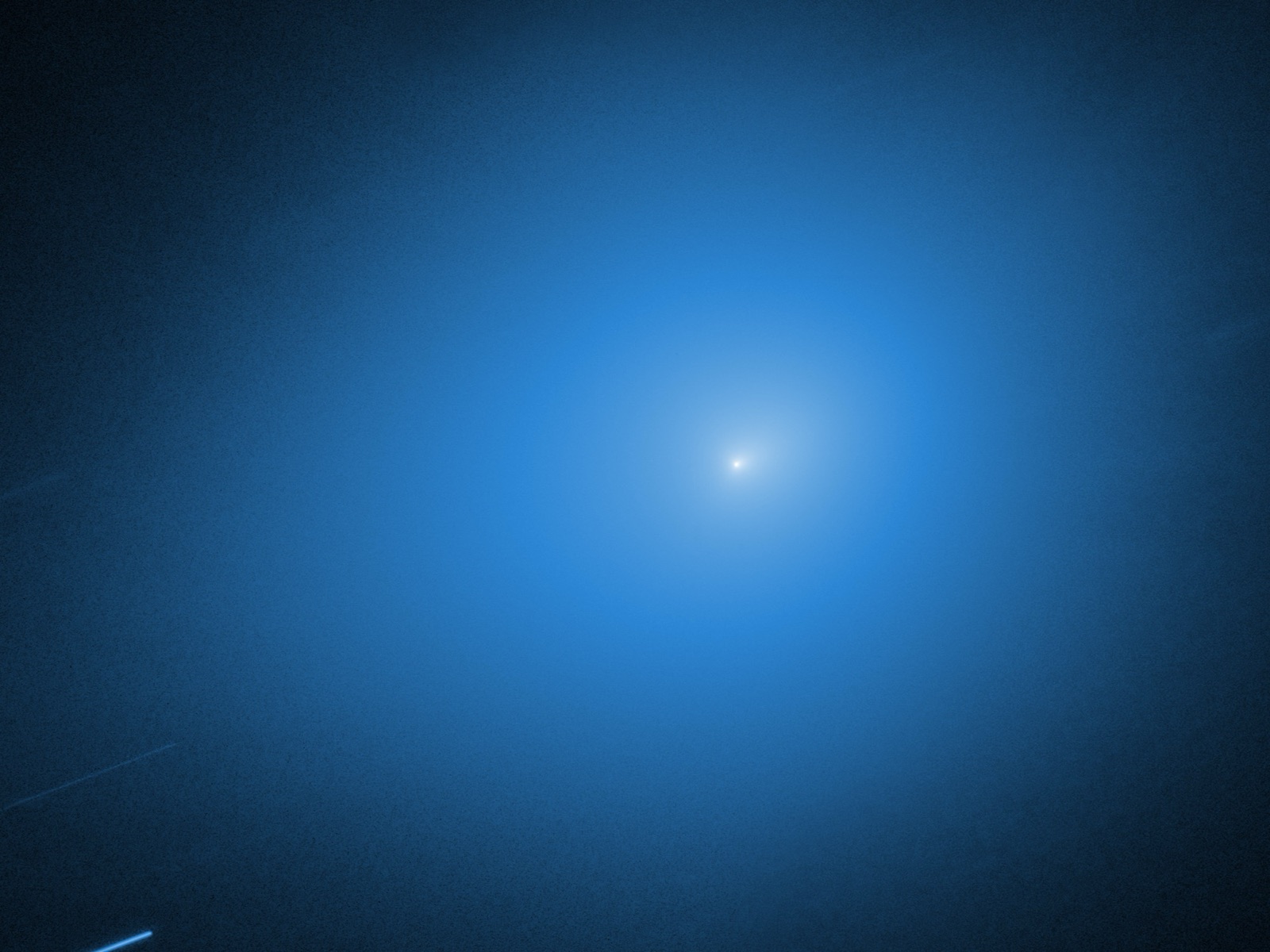
Webb's 'Oldest Galaxy' Candidate Moved. It Was a Brown Dwarf Nearby.
A faint red dot looked like a galaxy from 100 million years after the Big Bang. Three and a half years later it had shifted on the sky, so it is a cold brown dwarf in our own galaxy.
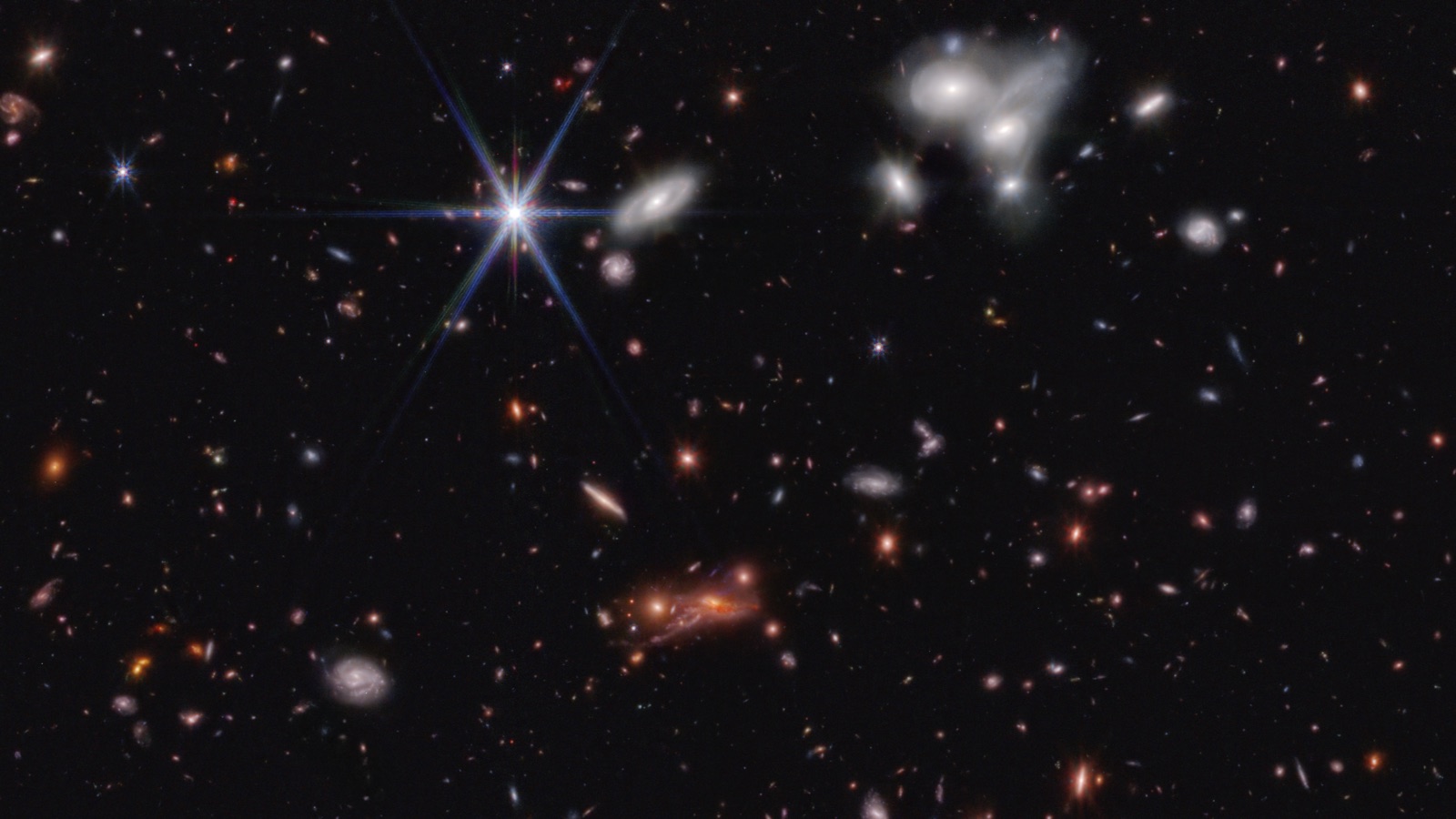
In 2025, a faint red dot in James Webb Space Telescope images looked like it might be the most distant galaxy ever seen, shining just 100 million years after the Big Bang. Then Webb photographed the same patch of sky again, three and a half years later, and the dot was no longer in the same place. A galaxy at the edge of the observable universe cannot do that. A cold, dim object inside our own Milky Way can.
What they found
The dot is called Capotauro. A team led by Giovanni Gandolfi at the University of Padua reported it in September 2025. It sits in images from a Webb survey called CEERS, taken in December 2022 in the constellation Boötes.
Its colors were extreme. In every Webb filter bluer than about 3.5 microns it was invisible. In the two reddest filters, near 4.1 and 4.4 microns, it was clearly there. Between 3.5 and 4.5 microns its brightness jumped by more than three magnitudes, which means more than 15 times.
If Capotauro were a galaxy, that pattern would put it at a redshift of about 32. Its light would have left it roughly 100 million years after the Big Bang. The confirmed record holder, a galaxy called MoM-z14, is seen about 280 million years after the Big Bang, so Capotauro would have beaten it by nearly 200 million years.
The Padua team did not claim a record. They wrote that the observations available could not settle what Capotauro was, and they listed other options, including a very cold brown dwarf much closer to home.
The new paper settles it. A team at the University of Edinburgh, led by Fengyuan Liu and Derek McLeod, shows that Capotauro moved across the sky between 2022 and 2026. It is a Y-type brown dwarf, one of the coldest kinds known, about 2,400 light-years (730 parsecs) away.
How they know
Anything inside our galaxy drifts slowly across the sky as it and the Sun orbit the galactic center. Astronomers call this proper motion. A galaxy billions of light-years away is so far off that its position looks fixed, even to Webb.
In June 2026, two newer Webb programs, called MINERVA and SPAM, imaged the CEERS field again. That gave the Edinburgh team two pictures of Capotauro taken 3.5 years apart.
They measured its position against 68 compact background sources in the same images. Between the two dates, Capotauro had shifted by 132 thousandths of an arcsecond, give or take 20. That is roughly the width of a human hair seen from 400 feet (120 meters). Spread over 3.5 years, it works out to about 38 thousandths of an arcsecond per year.
The shift is small, but it is more than six times larger than the measurement uncertainty. The team says that rules out any galaxy, active black hole or supernova far outside the Milky Way.
Why does a brown dwarf look like an ancient galaxy? Brown dwarfs are too small to keep fusing hydrogen like a star, so they cool down over time. In the coldest ones, methane and water in the atmosphere absorb most of the light at shorter infrared wavelengths, while light near 4 to 5 microns escapes. Through Webb's filters, that leaves an object dark in the bluer bands and bright in the reddest ones. A very distant galaxy gives the same pattern for a different reason: hydrogen in the early universe absorbs its light below a certain wavelength, and the expansion of space stretches that cutoff far into the infrared.
What it really is
The Edinburgh team's best fit is a brown dwarf of spectral type Y1, with a temperature of about 350 kelvin. That is about 170°F (77°C), hot for a bath but extremely cold for an object that formed the way stars do. Its distance of about 2,400 light-years comes from comparing how bright it looks with other Y dwarfs, not from a direct geometric measurement. Its mass was not measured.
It is not the coldest brown dwarf known. That title goes to WISE 0855, about 7 light-years from the Sun, at around 285 kelvin. But the authors describe Capotauro as one of the most distant Y dwarfs found so far.
Why it matters
Finding the first galaxies is one of Webb's main jobs, and most candidates start out as dots that vanish in bluer filters. This result shows that a cold brown dwarf can produce the same pattern. The authors put it plainly: brown dwarfs like Capotauro "can masquerade as a population" of galaxies at redshift 30.
It is not the first case. A 2022 candidate called CEERS-93316 looked like it was at redshift 16, but a spectrum later placed it at about 4.9. In 2026, another team showed that two more early-galaxy candidates were brown dwarfs between 1,000 and 2,800 light-years away. A separate study of Webb's deep JADES fields found 41 candidate T and Y dwarfs, some of them thousands of light-years from the Sun.
The fix is to check twice: look for motion, or take a spectrum. MoM-z14's record rests on a spectrum that shows lines from specific elements at measured positions, so it still stands.
What is still uncertain
The distance is an estimate from brightness, so it carries an uncertainty of about 15 percent. The team also notes that the data cannot rule out an even colder brown dwarf than type Y1. One attempt to take a spectrum of Capotauro was too faint to be decisive, which is why the motion test mattered.
The paper
"A clear detection of proper motion confirms that the claimed z ≃ 32 galaxy candidate, 'Capotauro', is a Y-type brown dwarf" by F.-Y. F. Liu, D. J. McLeod and colleagues at the University of Edinburgh and other institutions was published in Monthly Notices of the Royal Astronomical Society on 28 October 2026. It compares Webb NIRCam images of the CEERS field from December 2022 with new images from June 2026. The original candidate paper is Gandolfi et al., Astronomy & Astrophysics 706, A364 (2026). We walk through the whole story in our Redshift Report episode.